
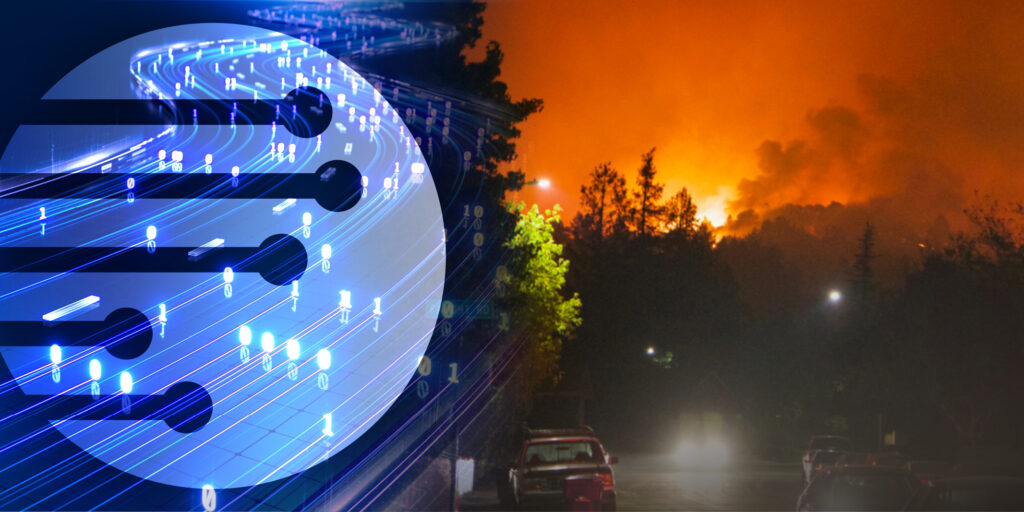
Wenn ein Waldbrand endlich unter Kontrolle gebracht ist, beginnt eine andere Art von Untersuchung. Wer ist verantwortlich? Was geschah in den entscheidenden Stunden vor dem Ausbruch? Und ganz entscheidend: Können die Beweise es belegen?
In einem Artikel, der veröffentlicht wurde Der heutige General Counsel, Geschäftsführer für digitale Forensik und eDiscovery bei iDS Mark Clews Das Buch nimmt die Leser mit in eine brisante Waldbrandermittlung, die sowohl die Komplexität nicht standardisierter digitaler Beweismittel als auch den entscheidenden Unterschied verdeutlicht, den eine schnelle und rechtssichere forensische Sicherung ausmachen kann.
Das Kincade-Feuer
Im Jahr 2019 brach in Nordkalifornien in der Nähe eines Geothermalkraftwerks ein Feuer aus, das sich schließlich zum größten Waldbrand in der Geschichte von Sonoma County entwickelte. Es verbrannte über 77.000 Acres Land und zerstörte schätzungsweise 167 Häuser, bevor es unter Kontrolle gebracht werden konnte.
Das iDS-Team wurde beauftragt, die Maßnahmen des Geothermiekraftwerks vor der Zündung zu untersuchen. Das Kraftwerk wurde aus Sicherheitsgründen und zur Beweissicherung abgeschaltet – daher war Eile geboten, sowohl um kritische Daten zu sichern als auch um die rechtzeitige Wiederinbetriebnahme der Anlage zu ermöglichen.
Die Datenquellen, die niemand erwartet hatte
Ein Team für digitale Forensik wurde umgehend eingesetzt und begann, Geothermie-, Maschinenbau- und Elektrotechnikingenieure zu befragen, um alle potenziellen Beweismittel zu erfassen. Ihre Erkenntnisse gingen weit über die üblichen Unternehmensdaten hinaus.
Zusätzlich zur E-Mail-Kommunikation und der Dokumentation von Standardarbeitsanweisungen identifizierte und entwickelte das Team Strategien zur rechtssicheren Aufbewahrung einer Reihe von nicht standardmäßigen Quellen: CCTV-Aufnahmen, Audioaufzeichnungen von Zwei-Wege-Funkgeräten, Protokolle von Leistungsschaltern, Sicherheitszugriffsprotokolle, SCADA-Betriebsdaten, Anemometer-Windtelemetrie und Aufzeichnungen von Mobilgeräten.
Einige dieser Maßnahmen erforderten unkonventionelle Datenerfassungsmethoden – darunter der Einsatz einer Hubarbeitsbühne zur Datenerfassung von an Masten montierten Geräten und das Betreten stockdunkler, stillgelegter Turbinenräume zur Sicherung wichtiger Protokolle. In mehreren Fällen drohten wichtige Daten nach Wiederaufnahme des Anlagenbetriebs überschrieben zu werden. Wäre die Datensicherung nicht schnell erfolgt, wären diese Beweise unwiederbringlich verloren gewesen.
Von unzusammenhängenden Daten zu einer vertretbaren Zeitleiste
Nach der Datensicherung bestand die Herausforderung darin, die Daten zu interpretieren. Das iDS-Team für strukturierte Daten erfasste alle Quellen – E-Mails, Dokumente, Audio-, Video- und Protokolldateien – in einem zentralen Repository, extrahierte und korrelierte einzelne Einträge, um eine umfassende, visualisierte Zeitleiste der Ereignisse zu erstellen.
Der zeitliche Ablauf ergab ein eindeutiges Bild: Die Leitungen des Kunden waren vor dem Ausbruch des Feuers an der PG&E-Übertragungsleitung abgeschaltet worden. Die visualisierten Beweise belegten zweifelsfrei, dass die Geothermieanlage nicht die Ursache war.
Die kalifornische Forst- und Brandschutzbehörde stellte schließlich fest, dass der Brand durch eine Hochspannungsleitung von PG&E verursacht wurde, die bei starkem Wind beschädigt war. PG&E akzeptierte diese Feststellung und einigte sich mit Sonoma County auf einen Vergleich in Höhe von 1,4 Billionen US-Dollar.
Warum das jetzt wichtig ist
Wie Clews anmerkt, lassen sich die Lehren aus dem Kincade-Feuer direkt auf laufende Untersuchungen nach neueren Großereignissen übertragen – darunter die Brände Palisades und Eaton im Januar 2025, bei denen rund 37.000 Hektar Land verbrannten und mehr als 16.000 Gebäude im gesamten Los Angeles County zerstört wurden.
Bei jeder wichtigen Untersuchung hängt der Erfolg oft davon ab, die relevanten Datenquellen zu identifizieren und schnell zu handeln, um die am stärksten gefährdeten Daten zu sichern. Der rasche Einsatz eines Teams, das die richtigen Fragen stellt, der Datensicherung Priorität einräumt und maßgeschneiderte Arbeitsabläufe für nicht standardisierte Daten entwickelt, kann den entscheidenden Unterschied zwischen Spekulation und Beweis ausmachen.
Bei iDS, unser Digitale Forensik, Strukturierte Daten & Analysen, Und Zeugnis Die verschiedenen Praktiken greifen nahtlos ineinander, um technisch fundierte und verteidigungsfähige Narrative zu konstruieren – basierend auf dem, was die Beweise zeigen und was sie definitiv ausschließen.
Um mit einem iDS-Experten in Kontakt zu treten, besuchen Sie idsinc.com.
iDS bietet beratende Datenlösungen für Unternehmen und Anwaltskanzleien auf der ganzen Welt und verschafft ihnen damit einen entscheidenden Vorteil – sowohl vor Gericht als auch außerhalb. Die Fachexperten und Datenstrategen von iDS sind darauf spezialisiert, Lösungen für komplexe Datenprobleme zu finden und sicherzustellen, dass Daten als Vermögenswert und nicht als Belastung genutzt werden können. Weitere Informationen finden Sie unter idsinc.com.
Haben Sie Schwierigkeiten mit einem in diesem Beitrag verwendeten Fachbegriff? Schauen Sie in unserem Glossar für Datenanalysten den Code zu knacken.