
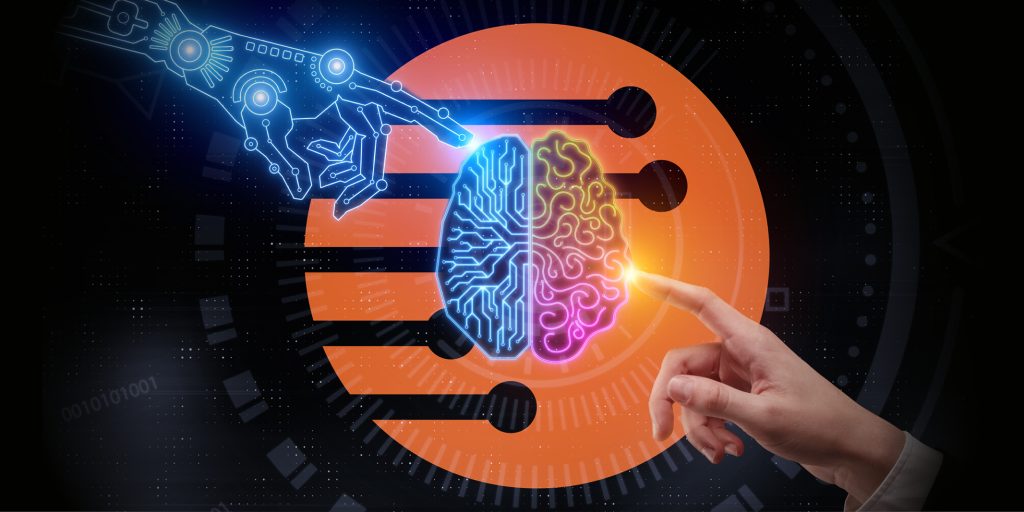
The AI conversation in professional services has become dominated by a familiar pitch: do more with less, cut costs, reduce headcount. It is a compelling message for a CFO. But according to iDS President Hunter McMahon, it is also the wrong frame entirely.
In an article published in Today’s General Counsel, McMahon argues that the organizations seeing the most success with AI aren’t the ones racing to automate everything — they are the ones pairing purposeful AI adoption with the kind of deep human expertise that no tool can replicate.
The Right Metric Isn’t Speed
The promise of AI shouldn’t be measured in how fast you can generate an output. It should be measured in the value of what you do with it. McMahon draws a sharp distinction: a junior team member asked to summarize a complex problem might produce a well-structured brief, but without the experience to know what’s truly relevant, it is just that — a brief. AI can produce the same summary in seconds. But the value lies in what a seasoned advisor does next — validating it, adding context, and transforming it into actionable insight.
That distinction, McMahon writes, is where decades of experience, layered with curiosity and good judgment, outpaces raw speed every time.
For legal and compliance teams specifically, the opportunity isn’t to replace professional judgment — it’s to free it up. If AI handles document drafting, risk flagging, or case file summarization, the legal team gains capacity to think proactively, advise strategically, and engage with the business in real time.
Purpose-Driven Adoption
McMahon is clear that AI adoption should be intentional, not wholesale. The organizations getting the most from these tools are identifying specific pain points — contract redlining, data gathering, repetitive analysis — and asking whether AI can make that particular task faster or better. That’s purpose-driven adoption. Measurable, deliberate, and still anchored in human expertise.
Curiosity plays a central role here too. Curious advisors don’t just react to information — they interrogate it, look for gaps, and ask “what if?” and “why not?” That instinct is what ensures AI outputs are tested and validated rather than accepted uncritically. AI, McMahon writes, doesn’t replace curiosity. It amplifies those who have it.
What Stays Human
At the end of the day, AI will narrow the gap in access to information. It will not narrow the gap in sound judgment, earned trust, or hard-won experience. Those remain the domain of professionals who lead with expertise and treat AI as a tool to deliver more — not a shortcut to deliver less.
The future, as McMahon puts it plainly, isn’t about being replaced by AI. It’s about trusted advisors who master AI replacing those who don’t.
At iDS, that philosophy shapes every engagement. Our Investigations, Digital Forensics, eDiscovery & Disclosure, and Structured Data & Analytics practices are built on the belief that the best outcomes come from experienced professionals equipped with modern tools — not tools operating in place of them.
To connect with an iDS expert about your next investigation, visit idsinc.com.
iDS provides consultative data solutions to corporations and law firms around the world, giving them a decisive advantage – both in and out of the courtroom. iDS’s subject matter experts and data strategists specialize in finding solutions to complex data problems, ensuring data can be leveraged as an asset, not a liability. To learn more, visit idsinc.com.
Having trouble with a technical term used in this post? Check out our Data Investigators Glossary to crack the code.