← Insights
iDS Talks

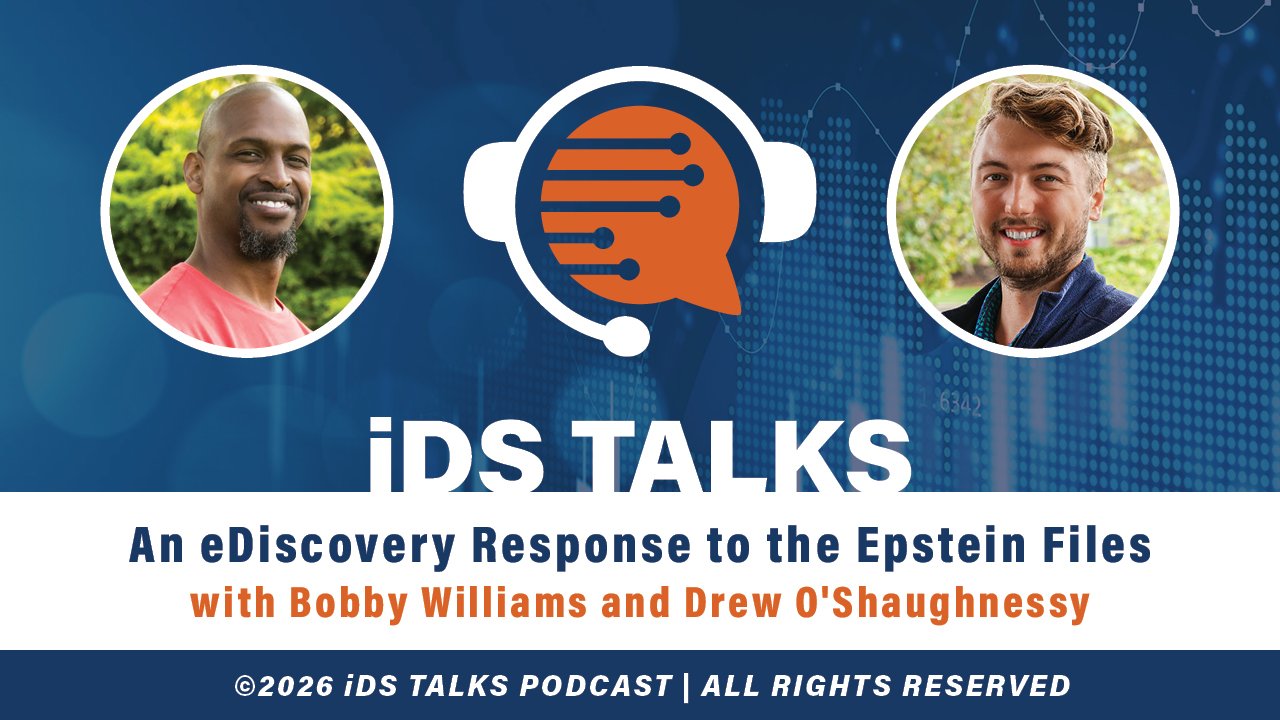
An eDiscovery Response to the Epstein Files

Bobby Williams and Drew O’Shaughnessy on discovery at extreme scale.

What happens when massive volumes of sensitive data enter the public conversation?

In this episode of iDS Talks, Bobby Williams and Drew O’Shaughnessy break down the eDiscovery and digital forensics questions surrounding the Epstein files. The focus isn’t speculation. It’s the data.

They discuss:

• Why every investigation should treat data as if litigation is inevitable
• The importance of chain of custody and documentation from the start
• What investigators look for when determining best evidence vs. derivative files
• How metadata, file structure, and formatting can reveal red flags or contradictions
• Why asking the right questions about who collected the data, how, and when matters more than people think

Subscribe to iDS Talks for more discussions on eDiscovery, digital forensics, and data strategy for legal teams.


Want more conversations like this one? Subscribe to iDS Talks, the official iDS podcast featuring candid conversations with the experts from iDS as well as guest appearances from data solutions experts, attorneys, and industry leaders on the trends shaping eDiscovery, digital forensics, and data strategy. New episodes are available on Apple Podcasts, Spotify, and everywhere you listen.

Having trouble with a technical term used in this post? Check out our Data Investigators Glossary to crack the code.

← Back to Insights
What is at stake

The earlier you understand the evidence, the better the decisions that follow.

The evidence is abundant. But volume is not access. Access is not understanding. And understanding is not an expert opinion.

Increasingly, evidence is buried across devices, applications, databases, cloud systems, transactions, and other complex sources. It must be found, preserved, made accessible, understood, and interpreted in the context of the matter. And when expert testimony is required, that understanding must support an independent, defensible opinion.

When important evidence surfaces late, assumptions may already have become strategy. When it is identified, tested, and understood early, your team can build its strategy around what can actually be shown. This isn’t just for trial. It is also for TROs, letters rogatory, discovery requests, subpoenas, depositions, summary judgment, mediation, and arbitration.

You bring the legal expertise. We bring the evidence expertise.

iDS combines technical, analytical, and subject-matter expertise to help you move from evidence to understanding, and, when necessary, from understanding to opinion and testimony.

You know the law. We help you know the evidence.

Bring us your question

Tell us what you need to establish. We will tell you what the evidence shows, what it does not, and what it means for your case.

Contact iDS

Not ready for that yet

Read how we approached matters that started as unanswerable questions. No client details, no case statistics.

See the Can You…? questions →
iDiscovery Solutions

Truth Through Data

Where expertise leads, defensible outcomes follow.

X f in ▶
Firm
About Us Capabilities Our Experts Speakers Can You…? Join Our Team
Thinking
AI & Evidence Insights Case Studies
Offices
Washington, DC
3000 K Street NW, Suite 425
Washington, DC 20007
Costa Mesa, CA
535 Anton Blvd., Suite 860
Costa Mesa, CA 92626
Alpharetta, GA
11720 Amber Park Drive, Suite 160
Alpharetta, GA 30009
Contact
info@idsinc.com US: +1.800.813.4832 Bring us your question

Copyright © 2026 iDiscovery Solutions, Inc. All Rights Reserved  |  Privacy Policy  |  Cookie settings