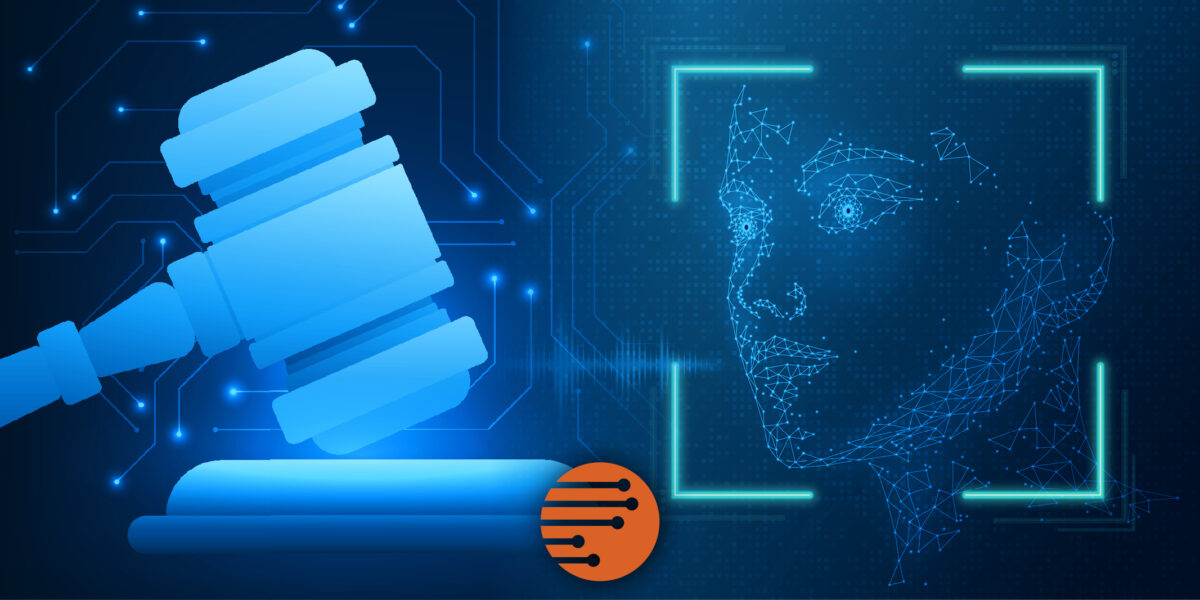
False evidence is not a new problem. It is as old as trial itself. But the combination of AI-generated media and a courtroom culture that tends to trust technology has created conditions that are, as iDS CEO & Founder Dan Regard puts it, easier than ever to exploit — and harder than ever to detect without the right expertise.
In the second installment of his Regarding Evidence column in Today’s Managing Partner, Regard examines the growing threat of deepfakes and shallow fakes in litigation, introduces a practical framework for detecting falsified evidence, and explores what the legal system is — and isn’t — doing to keep pace.
Deepfakes vs. Shallow Fakes: Know the Difference
Regard draws a useful distinction between two categories of fabricated digital evidence.
A deepfake is a file created entirely from scratch — a synthetic video, image, audio recording, or document with no authentic original underlying it. A shallow fake is a real file that has been altered: a video clip pulled out of context, an audio file edited, or a timestamp quietly changed on an email.
Both occur in litigation. But in Regard’s experience, it is the shallow fake that is far more pervasive — and the cases are predominantly document-based. Contracts, emails, and text messages are the primary targets. The technology required to alter them is widely accessible, and the assumption that digital evidence is inherently trustworthy means fabrications often go unchallenged.
The Liar’s Dividend
One of the more troubling phenomena Regard identifies is what he calls the Liar’s Dividend: the advantage a bad actor gains not by fabricating evidence, but simply by casting doubt on legitimate evidence. In an environment already primed by “fake news” anxieties, challenging the authenticity of any unfavourable digital record — regardless of whether it is genuine — forces the opposing party to expend significant resources proving something that should be self-evident.
It is a cynical but effective tactic, and one that legal teams need to be prepared to counter.
Three Steps to Detect False Evidence
Regard distils a practical detection framework from hundreds of disputes:
Trust your instincts. Attorneys frequently sense when something is off but hesitate to challenge digital evidence out of technical uncertainty. That instinct is often correct and worth pursuing.
Apply the Regard 3-Part Test. Ask three questions: Is this a key piece of evidence? Is there no original document or file? Is there a complicated story behind its existence? If all three answers are yes, there is a high likelihood the evidence has been fabricated.
Seek a second opinion. Cross-check against other documents for inconsistencies, conduct additional discovery where gaps exist, and consult a forensic expert capable of identifying the metadata anomalies and digital irregularities that reveal fabrication.
What the Rules Do — and Don’t — Cover
The 2017 amendments to the Federal Rules of Evidence introduced Rules 902(13) and 902(14), streamlining the self-authentication of machine-generated records and digital copies. These rules improve efficiency for structured, auditable data — but they do not address fabricated or synthetic evidence. Additional civil procedure rules provide some supplementary protection, and new amendments addressing AI-generated materials are under consideration.
The rules are evolving. Legal professionals who adapt now will be better positioned to navigate what comes next.
At iDS, authenticating digital evidence and detecting fabrication is core to what we do. Our Digital Forensics, Investigations, and Testimony practices are built to ensure that authenticity is not just assumed — but provable when it matters most.
To connect with an iDS expert, visit idsinc.com.
iDS provides consultative data solutions to corporations and law firms around the world, giving them a decisive advantage – both in and out of the courtroom. iDS’s subject matter experts and data strategists specialize in finding solutions to complex evidence challenges, ensuring data can be leveraged as an asset, not a liability. To learn more, visit idsinc.com.
Having trouble with a technical term used in this post? Check out our Data Investigators Glossary to crack the code.